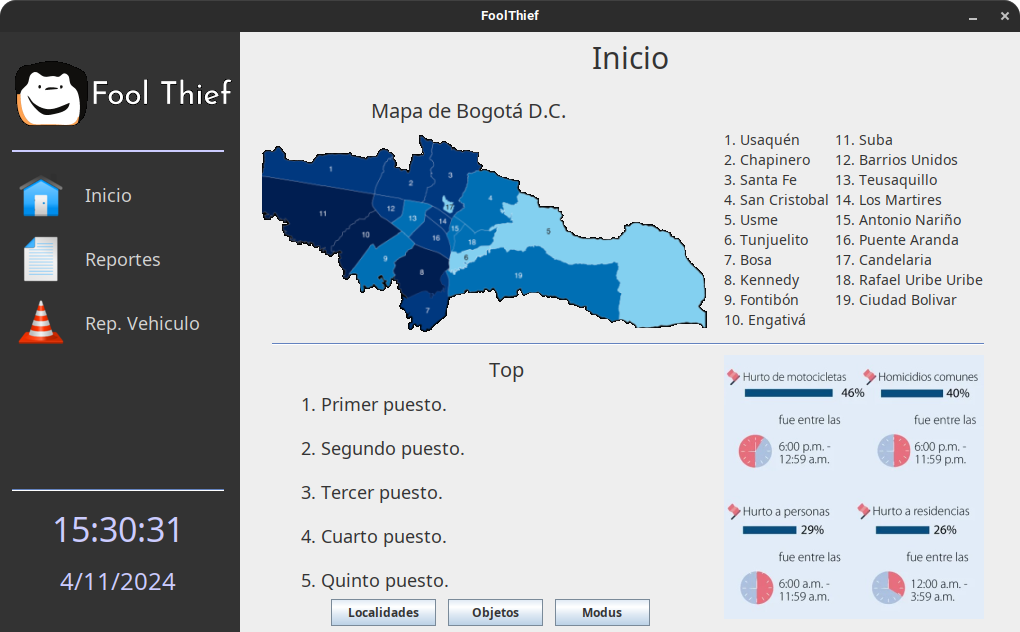
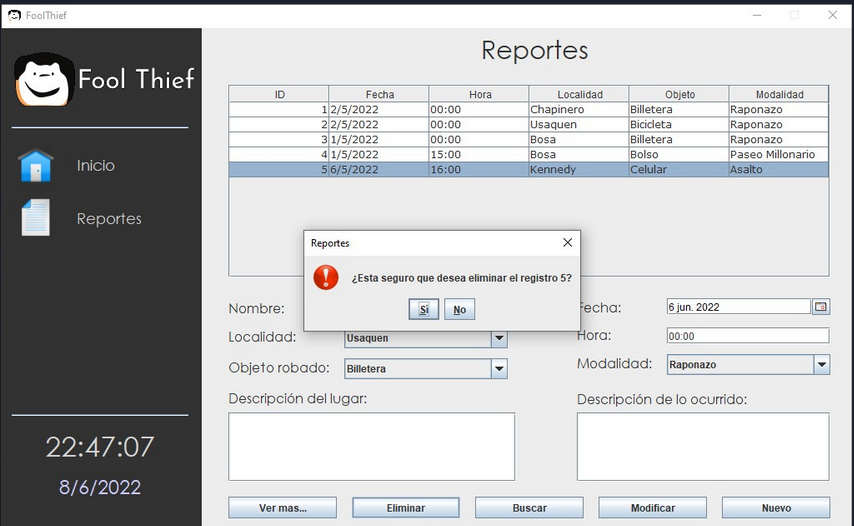
The Theft Incident Management System is a Java application designed to manage and analyze theft incidents reported by citizens. This is the second version of the project, incorporating different data structures for improved efficiency and functionality. The system allows users to report theft attempts, store incident details, and generate reports based on various criteria.
Implemented an AVL tree data structure to efficiently store and manage theft incidents. The AVL tree ensures balanced operations, leading to faster insertion, deletion, and retrieval of incidents. Binary Tree: Utilized a binary tree data structure to organize and process theft incident data. The binary tree supports hierarchical organization and enables efficient searching and traversal operations. Dynamic Array: Incorporated a dynamic array data structure to handle the storage and manipulation of theft incidents. The dynamic array allows for resizing and flexible management of the incident data.
Enhanced Report Generation:
Tops Class: Implemented a Tops class as a utility/helper class to perform various operations and calculations related to theft incidents. This class facilitates generating top reports based on different criteria, such as most frequent theft cases or highest-value stolen items. ReportController: Updated the ReportController class to handle user interactions and control the flow of data for reporting theft incidents. It now includes improved methods for processing and validating user input, as well as updating the appropriate data structures. Improved Efficiency and Performance:
With the incorporation of AVL tree and binary tree data structures, the system offers faster search and retrieval of theft incidents, reducing the processing time for generating reports and analyzing data. The dynamic array provides efficient resizing and management of incident data, optimizing storage utilization and improving overall performance. User-Friendly Interface:
The user interface has been refined to enhance user experience and improve usability. Users can easily report theft attempts, access incident details, and generate customized reports. Documentation and Code Formatting:
All classes and code have been thoroughly documented, providing clear explanations of their purpose, usage, and functionality. Code formatting practices have been followed to ensure readability and maintainability.